
Creating Color Harmony
Putting together harmonious color combinations begins with understanding how we see colors and the relationships of each hue to one another. A good way to see color relationships is to look at the color wheel.
The placement of the colors around the wheel are not random. They are arranged in spectral order (like the rainbow) bend into a complete circle. Each color's placement on the wheel can help you to identify harmonious color combinations.
Start with a quick review of the basics. The twelve hues of the color wheel are divided into primary colors, secondary colors, and tertiary colors.
Primary and Secondary Colors

The three primary colors are the hues that in theory can be mixed to make all other colors. These colors are equidistant around the outside of the circle.

By mixing two adjacent primary hues you create the three secondary colors of green, violet (purple) and orange.
- red + yellow = orange
- blue + red = violet
- yellow + blue = green
Tertiary Colors

The third set of hues are known as tertiary or intermediate colors. These hues are made by mixing a primary color with an adjacent secondary color.
The six tertiary or intermediate colors are:
yellow-green,
blue-green
blue-violet
red-violet
red-orange
yellow-orange
Note that the names for the tertiary colors always begin with the primary color followed by the secondary color; yellow-orange not orange-yellow, for example.
Color Placement Around the Wheel
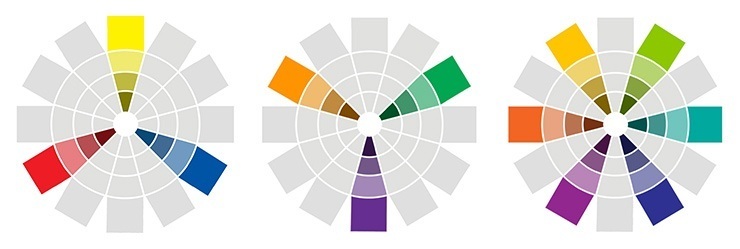
The twelve primary, secondary and tertiary hues along with their tints, tones, and shades make up the color wheel.
The Geometry of Color Harmony
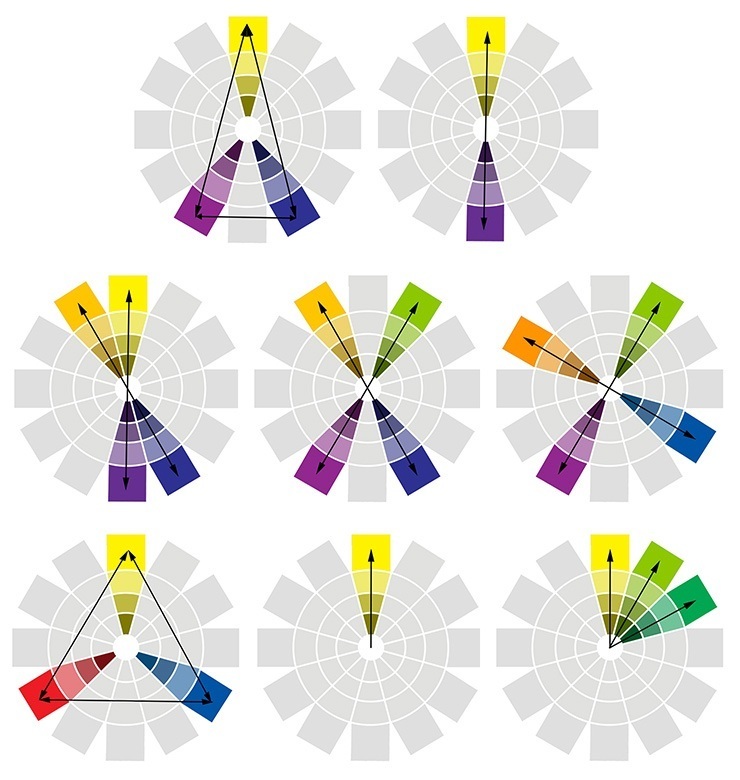
To create balance many of the majority of the classic color harmonies are combinations of colors that balance the spectrum of colors. These tried and true color combinations can be seen using geometric shapes to help you visualize the relationship of the hues on the color wheel.
Rotate these shapes around the central point of the color wheel to create dozens of classic color combinations.
Monochromatic: One Color Harmony
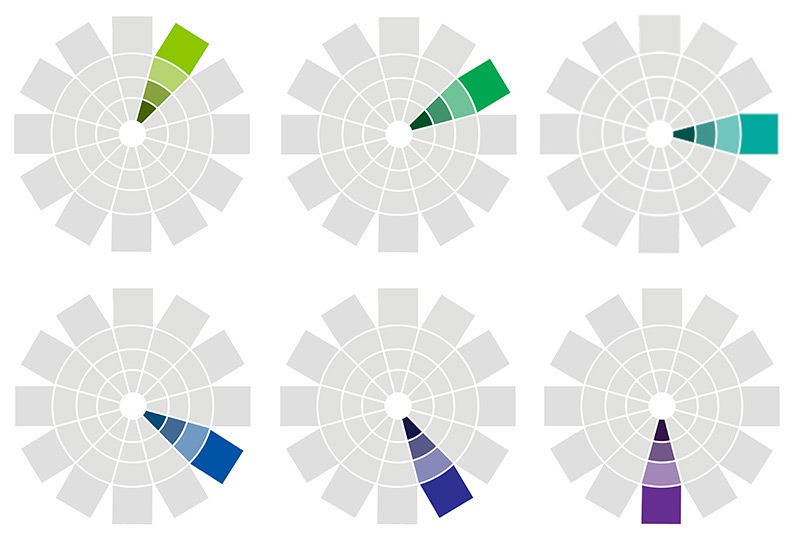
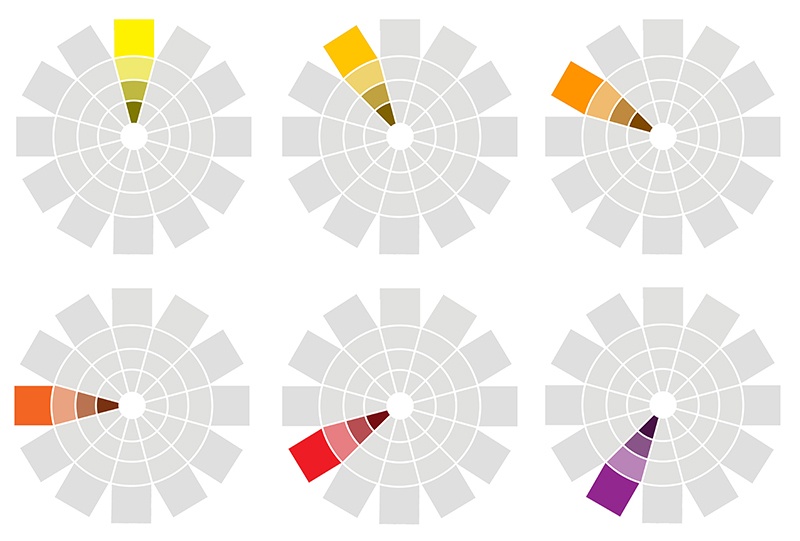
Monochromatic Harmony - is made from a single color family. In most designs, a monochromatic scheme includes a combination of tints, tones, and shades from the same color family together with black, white and/or gray. to add depth and contrast.
While you might think that this would be the easiest scheme to work with, it is one of the most difficult because without color contrast a design can seem flat or boring. A design must employ other techniques such as change in value, intensity, etc. to keep the design interesting.
Examples of the Monochromatic Color Harmony

Image credit: Boxed Water Is Better
Diad: Two Color Harmony
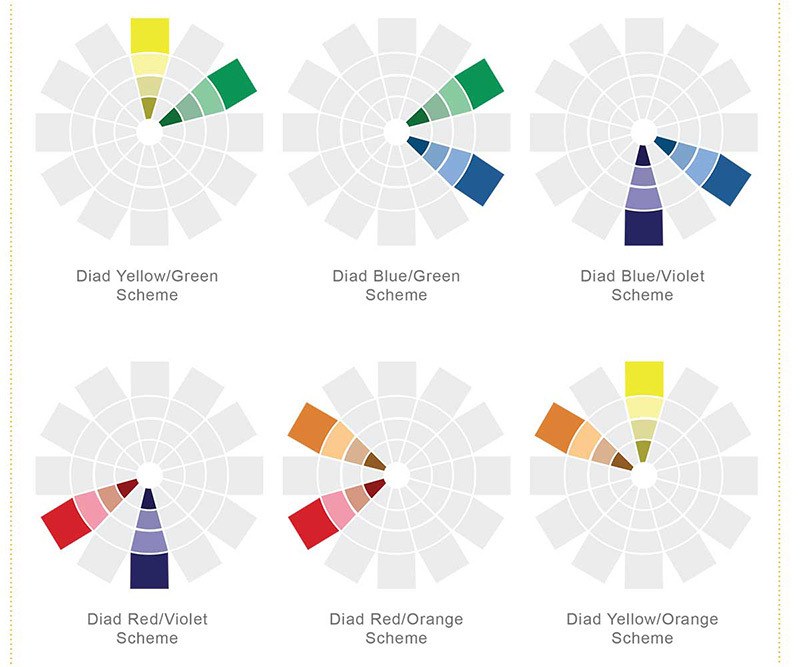
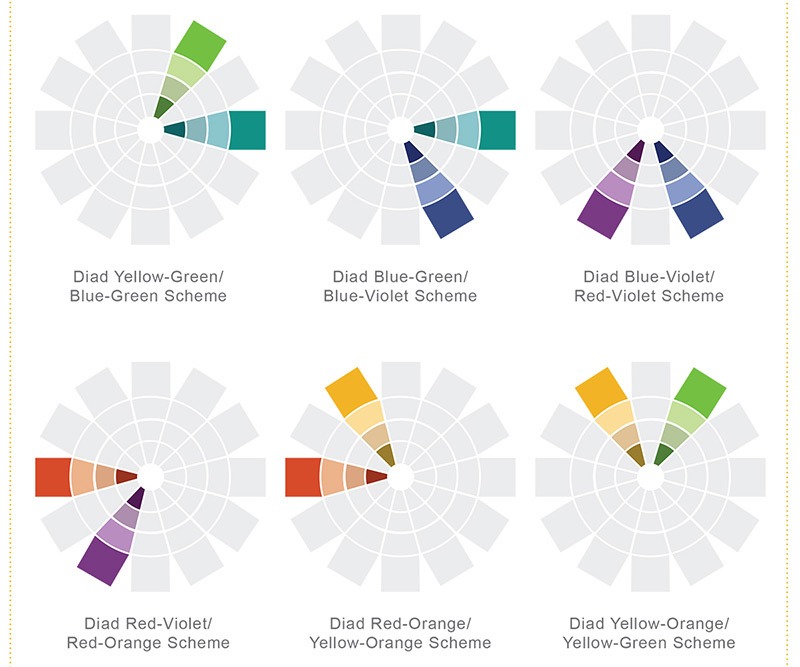
Diad Harmony - a combination of two colors that are separated by one color on the color wheel, ex. yellow and green or yellow-orange and red-orange. While the hues in this harmony can be used on their own, you will often see the diad combination used as accents colors with neutrals.
Examples of the Diad Color Harmony

Image credit: Krisztian Tabori
Complementary: Two Color Harmony
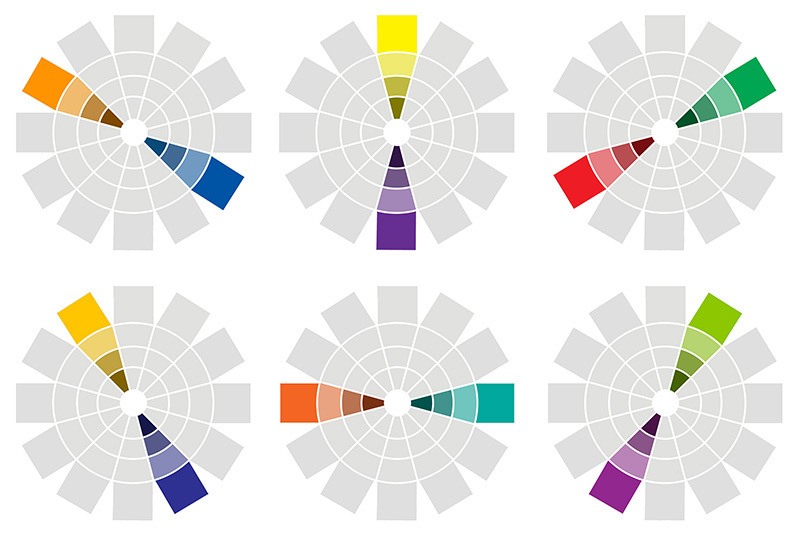
Complementary Harmony - created by pairing the two colors positioned directly across the color wheel from one another. Each color on the wheel has only one complement, which is also called its direct complement.
The complementary color harmony is has the highest degree of color contrast. The amount of contrast makes this harmony popular for logos, sports team colors, and graphics. In lighter or less intense colors it is popular for interior and exterior color schemes.
Examples of the Diad Color Harmony

Image credit: Nick Fewings
Split Complementary: 3 Color Harmony
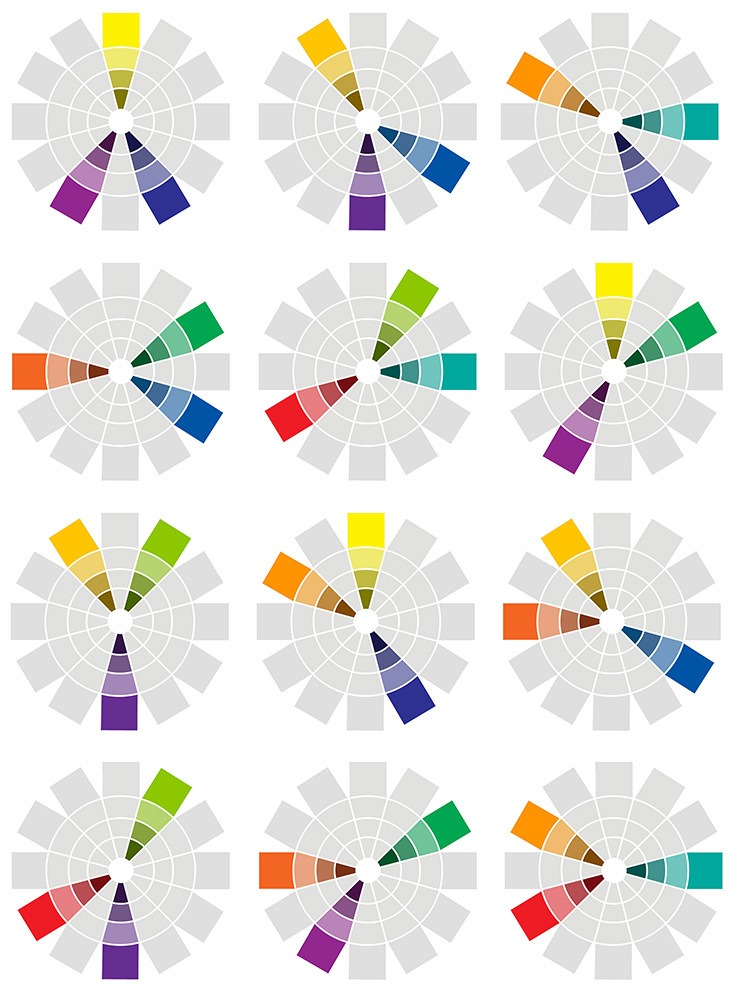
Split Complementary Harmony - One color paired with the two colors on either side of that color’s direct complement, also known as a divided complement.
Using the split complementary harmony is an easy way take the edge off of the strong contrast between two complements while giving your color scheme more variation and visual interest.
Triad: 3 Color Harmony
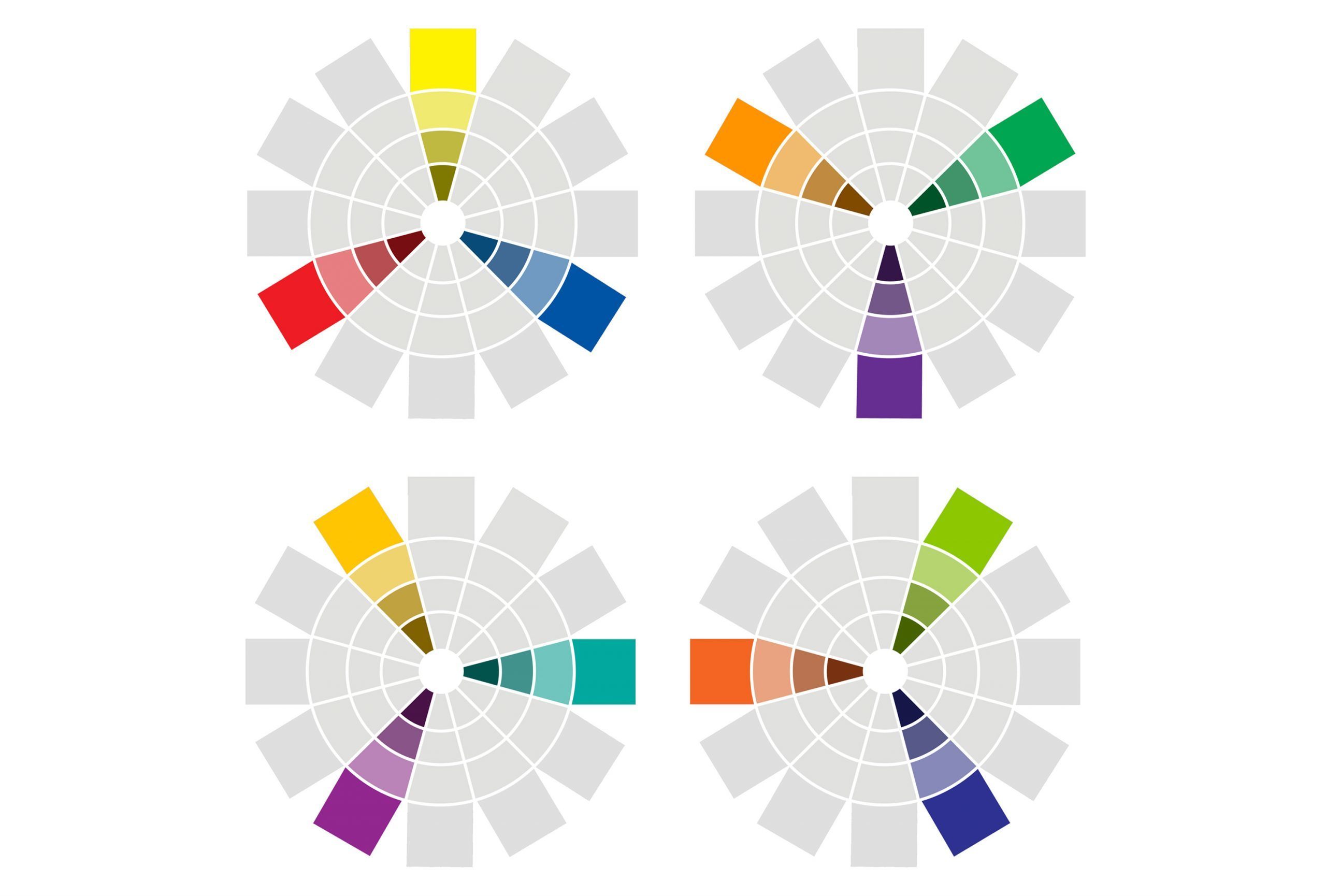
Triad - a combination of three hues that are equally spaced from one another around the color wheel. Ex. Red, Yellow, Blue or Green, Purple, Orange.
Examples of the Triad Color Harmony

Image. credit: Tania Malréchauffé
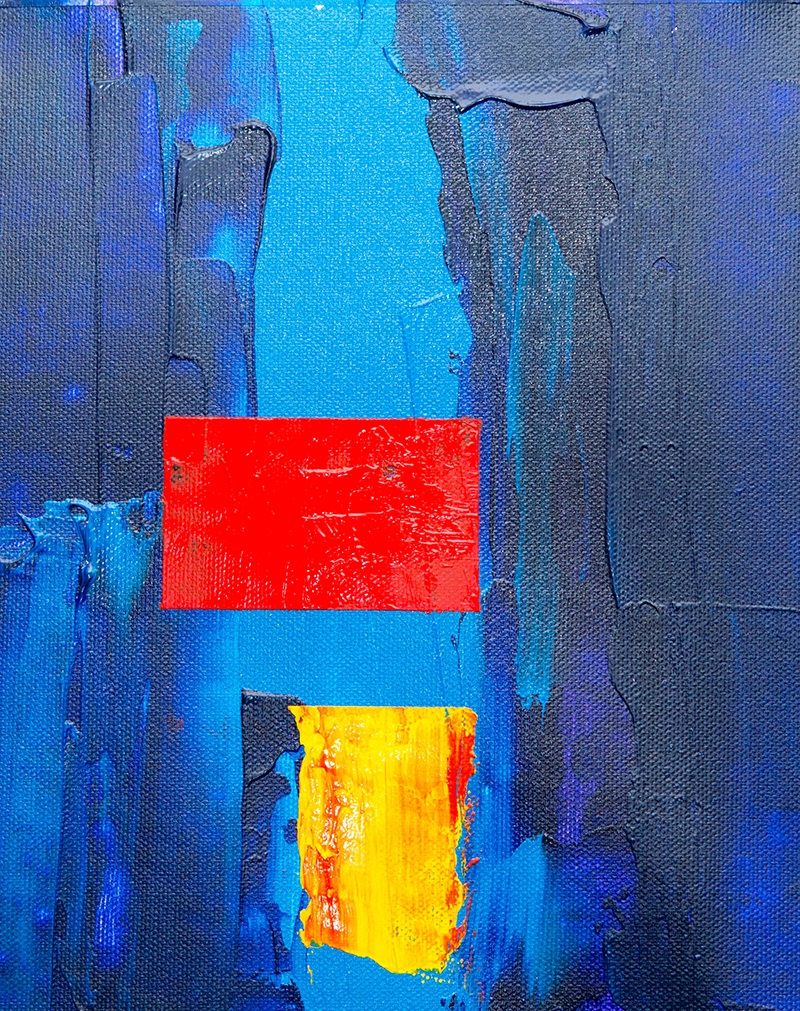
Image credit: Steve Johnson
Analogous: 3+ Color Harmony
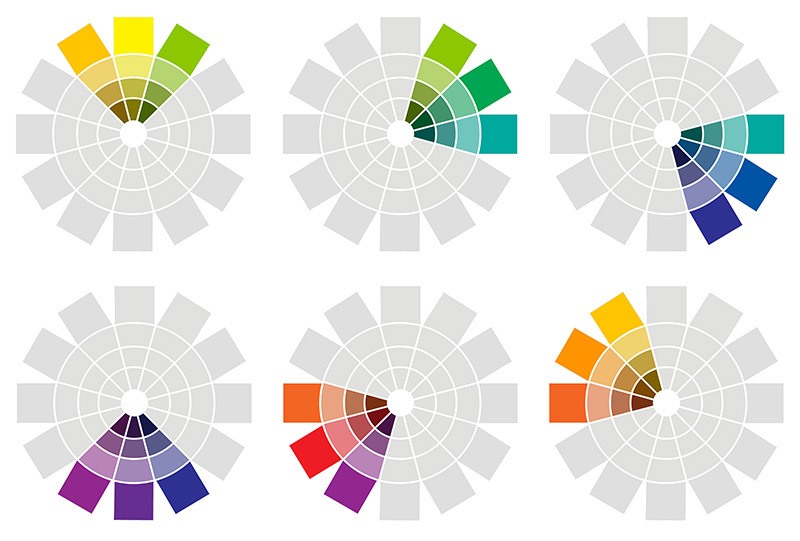
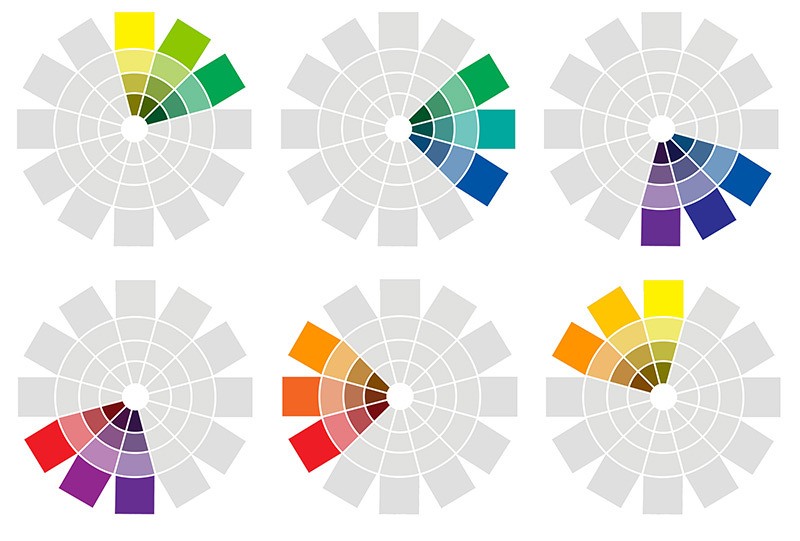
Analogous Harmony - consists of two or more color that are side-by-side on the color wheel. To select an analogous color scheme, find any color on the color wheel. Then, choose two to four more colors directly to the left or right of your color without skipping over any colors; also called adjoining colors.
Double Complementary: 4 Color Harmony
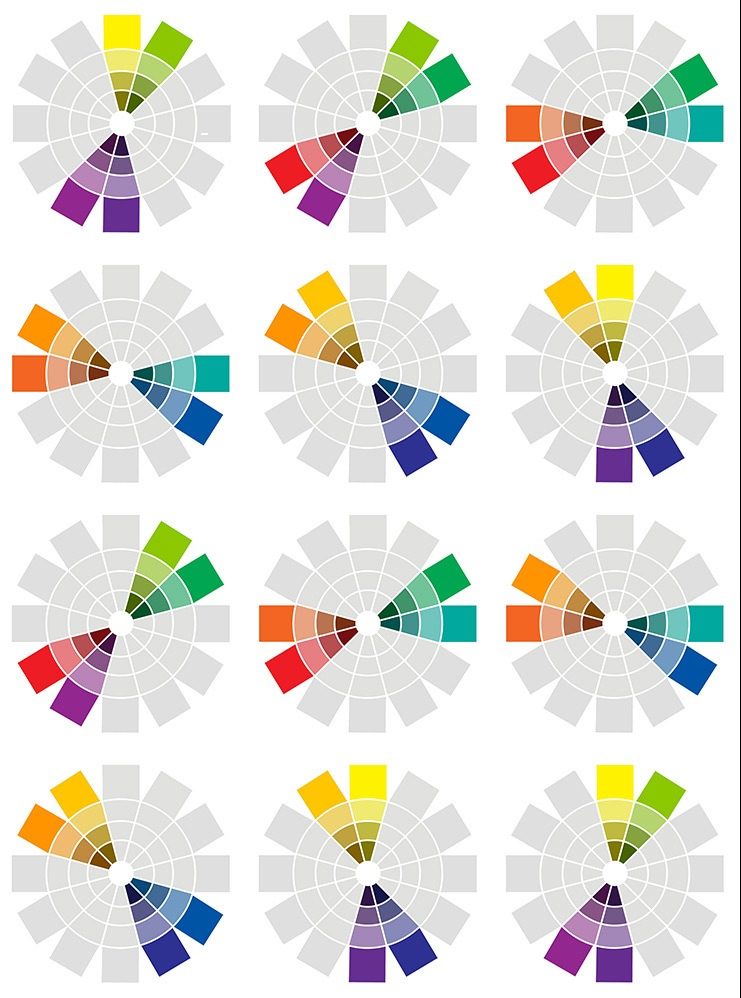
Double Complement - a color combinations made up of two sets of complementary colors.
Rectangular Tetrad: 4 Color Harmony
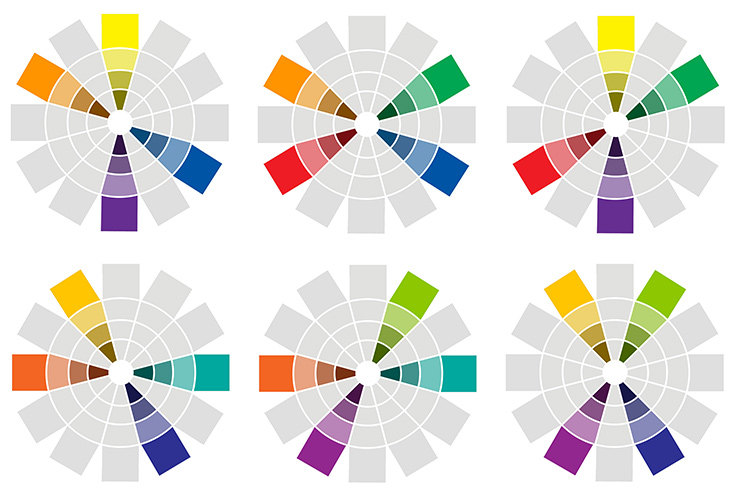
Square Tetrad: 4 Color Harmony
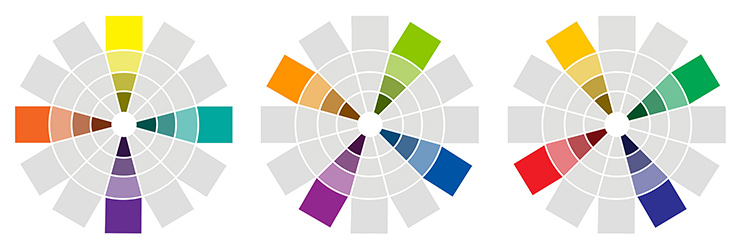
Tetrad Colors - combinations of two complementary pairs of colors with none of the colors being adjacent on the color wheel. Ex. Yellow, Purple, Green, and Blue. There are two formations of the tetrad harmony, rectangular and square.
Color Theory Tutorial
Go back to Lesson 1: Hue Value Chroma Explained
Go back to Lesson 2: Understanding the Color Wheel
You are currently on Lesson 3: Creating Color Harmony
Head to Lesson 4: Color Temperature
Skip Ahead to Lesson 5: How to Identify Undertones
On to Lesson 6: High Key, Low Key Color Combinations
Appendix 1: Color Terminology Glossary